
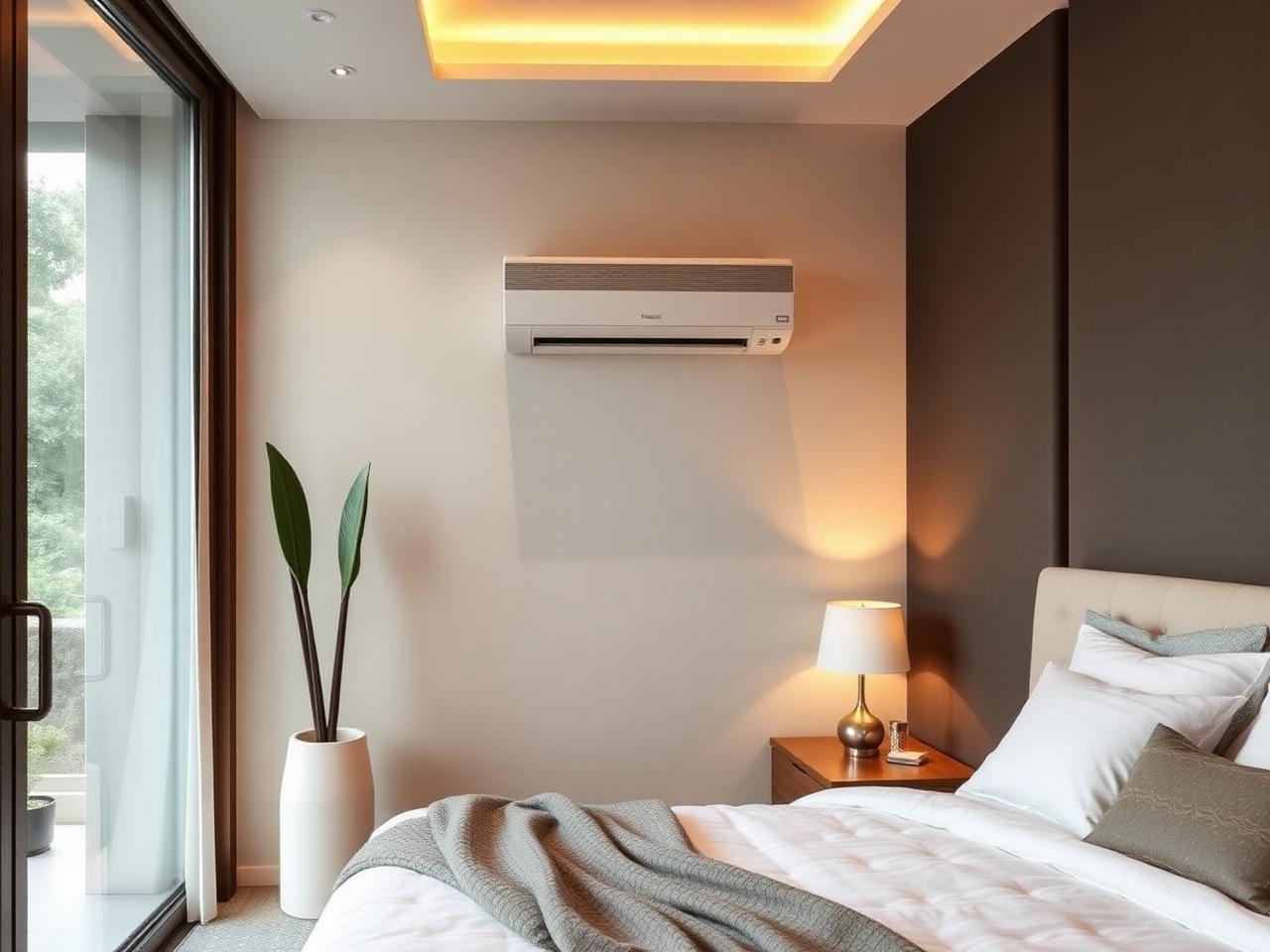
For most UK homes, a professionally installed single-room air conditioning system costs somewhere between £1,800 and £3,200, a two-to-three room multi-split lands around £4,000 to £7,500, and a fully ducted whole-house system usually starts near £10,000. The spread is wide because the equipment is only part of the bill — pipe runs, electrical work, access and the standard of finish you expect all move the number. This guide breaks down where the money actually goes so you can read a quote properly instead of just comparing headline prices.
Key takeaways
- One room, wall-mounted: £1,800–£3,200 installed for a quality inverter unit.
- Two to three rooms on one outdoor unit: roughly £4,000–£7,500.
- Ducted or concealed systems: £10,000+, and best planned during a renovation.
- Pipe run length, access and electrical upgrades are the biggest hidden variables.
- F-Gas certified installation protects your manufacturer warranty — uncertified work usually voids it.
What you are actually paying for
A home air conditioning installation is three costs stacked together: the equipment, the installation labour and materials, and the commissioning. The equipment is the part homeowners fixate on, but it is often less than half the total. A well-regarded 3.5kW wall unit might be £700–£1,100 trade; the rest of the quote is what turns that box into a working, quiet, tidy, warranted system in your house.
The installation covers the refrigerant pipework between indoor and outdoor units, the condensate drain, the electrical supply and isolator, the brackets or feet for the outdoor unit, core drilling through the wall, making good, and the trunking or concealed routing. Commissioning covers pressure testing, vacuuming the system down to remove moisture, charging refrigerant if the run is long, and handing over with documentation.
Typical UK prices by system type
| System | Best suited to | Typical installed cost |
|---|---|---|
| Single split (1 indoor unit) | One bedroom, home office, loft conversion | £1,800 – £3,200 |
| Twin split (2 indoor units) | Two bedrooms or bedroom + office | £3,200 – £5,200 |
| Multi-split (3–5 indoor units) | Whole first floor or open-plan ground floor | £4,500 – £9,000 |
| Concealed ducted (per zone) | New builds, full renovations, listed-look interiors | £4,000 – £7,000 per zone |
| Air-to-air heat pump upgrade | Homes wanting winter heating from the same units | Usually no extra hardware cost |
Indicative UK ranges for supply and install by an accredited engineer. Always confirm with a site survey.
These are ranges, not quotes. A straightforward first-floor bedroom with the outdoor unit going on the wall directly behind it will sit at the bottom of the range. The same unit in a top-floor room where the condenser has to go at ground level, with pipework boxed in and painted, will sit near the top.
The seven things that move the price
- 1Pipe run length. Anything past around five metres starts adding materials, labour and often extra refrigerant. Fifteen-metre runs through three floors are a different job to a two-metre run through one wall.
- 2Where the outdoor unit goes. Wall mounting at height, flat roof plinths, scaffolding or acoustic enclosures all add cost. Ground-level positions on a level base are cheapest.
- 3Electrical work. If your consumer unit has a spare way and is nearby, this is minor. If you need a new circuit run across the house, or the board is full, budget several hundred pounds more.
- 4Concealment. Surface trunking is included in most quotes. Chasing pipework into walls, lifting floors or boxing in and decorating is extra and slower.
- 5Property construction. Solid brick, stone, timber frame and cavity walls all core differently. Older Derbyshire properties with thick walls take longer.
- 6Equipment tier. Budget-brand units and premium Japanese inverter units with low noise ratings and better part-load efficiency can differ by £600 or more per indoor unit.
- 7Access and protection. Awkward loft hatches, occupied homes needing dust protection, and parking constraints all consume time.
What it costs to run
Running cost surprises people in a good way. A modern inverter split rated at 3.5kW cooling typically draws around 0.8kW to 1.1kW when working hard, and far less once the room reaches temperature. At a unit rate of roughly 26p per kWh, that is around 21p to 29p per hour at full tilt, and often under 10p per hour once it is holding a steady temperature.
| Use pattern | Approx. daily energy | Approx. daily cost |
|---|---|---|
| Bedroom, 8 hours overnight | 2.5 – 4 kWh | 65p – £1.05 |
| Home office, 8 hours weekday | 3 – 5 kWh | 80p – £1.30 |
| Open-plan lounge, hot afternoon | 5 – 8 kWh | £1.30 – £2.10 |
Illustrative figures at ~26p/kWh for a modern inverter system in a reasonably insulated home. Your rate and property will vary.
Because virtually every modern split system is also a heat pump, the same hardware will heat the room in winter at a coefficient of performance often above 3.5 — meaning roughly 3.5kW of heat for every 1kW of electricity. For a home office or a chilly extension, that can undercut running the gas boiler for the whole house.
Ripley and Derbyshire: what we see locally
Around Ripley, Alfreton, Belper and the villages between Derby and Chesterfield, the housing stock splits into three broad groups, and each behaves differently.
- Period cottages and converted farm buildings: thick walls, restricted external elevations and often a conservation overlay. Discreet condenser placement matters more than headline price here, and pipe routing takes planning.
- 1930s to 1980s family housing: usually the most straightforward. Cavity walls, accessible side returns and enough garden space for a tidy condenser position.
- New-build and recently extended homes: large glazed areas and open-plan rear extensions that overheat badly from mid-morning. These often justify a multi-split rather than a single unit.
Large south and west-facing glazing is the single biggest reason we get called out in this area. A room with three metres of bifolds will need noticeably more cooling capacity than its floor area alone would suggest, so be wary of any quote produced without someone asking about your glazing.
How to compare quotes properly
Check every quote includes these
- Named make and model of both indoor and outdoor units, with kW rating
- Pipe run length allowed for, and cost per extra metre
- Electrical works — new circuit or existing, and who certifies it
- How pipework is concealed and whether making good is included
- F-Gas registration number of the installing company
- Manufacturer warranty length and any annual servicing condition attached
- Commissioning certificate and handover documentation
A quote that is £700 cheaper than everyone else usually differs in one of those seven lines. The most common shortcut is an undersized allowance for pipework and electrics, which reappears as a variation once work starts.
Where homeowners overspend
Oversizing is the classic one. A unit that is too powerful for the room reaches temperature quickly, short-cycles, dehumidifies poorly and costs more to buy and run. Correct sizing comes from a heat load calculation using room volume, glazing, orientation, insulation and occupancy — not from a rule of thumb.
The second is buying a system per room over several years instead of planning it once. Three separate single splits mean three outdoor units, three sets of holes and three visits. If you know you will eventually cool three rooms, a single multi-split outdoor unit is usually cheaper overall and much tidier on the elevation.
The third is skipping the survey. Remote quoting from photographs is fast, but it prices an assumption. A twenty-minute site visit is what makes the number reliable.
Timescales
A single split in an accessible property is typically a one-day install. A two or three-room multi-split is usually two days. Ducted systems are measured in weeks and need to be sequenced with other trades, which is why they belong in a renovation programme rather than as a standalone project.
Lead times matter too. Demand spikes hard in the first genuinely hot week of the year, and that is the worst moment to be starting a survey. Planning an installation for spring or autumn generally means a shorter wait and a calmer job.
Frequently asked questions
Is air conditioning worth it in a UK home?+
For bedrooms, home offices and glazed extensions, most owners say yes — largely because the same system heats efficiently in winter, so it earns its keep year-round rather than for a few weeks in summer.
Can I install air conditioning myself?+
No. Handling refrigerant legally requires F-Gas certification, and self-installation will normally void the manufacturer warranty and can invalidate home insurance claims relating to the work.
Does air conditioning add value to a house?+
It is best treated as a comfort and usability improvement rather than a guaranteed valuation uplift. A neat, well-specified installation is a selling point; a poorly routed one on a front elevation is not.
How long does a home system last?+
Fifteen years or more is realistic for quality equipment that is serviced annually. Neglected systems tend to fail early through blocked coils, dirty filters and undetected refrigerant loss.