
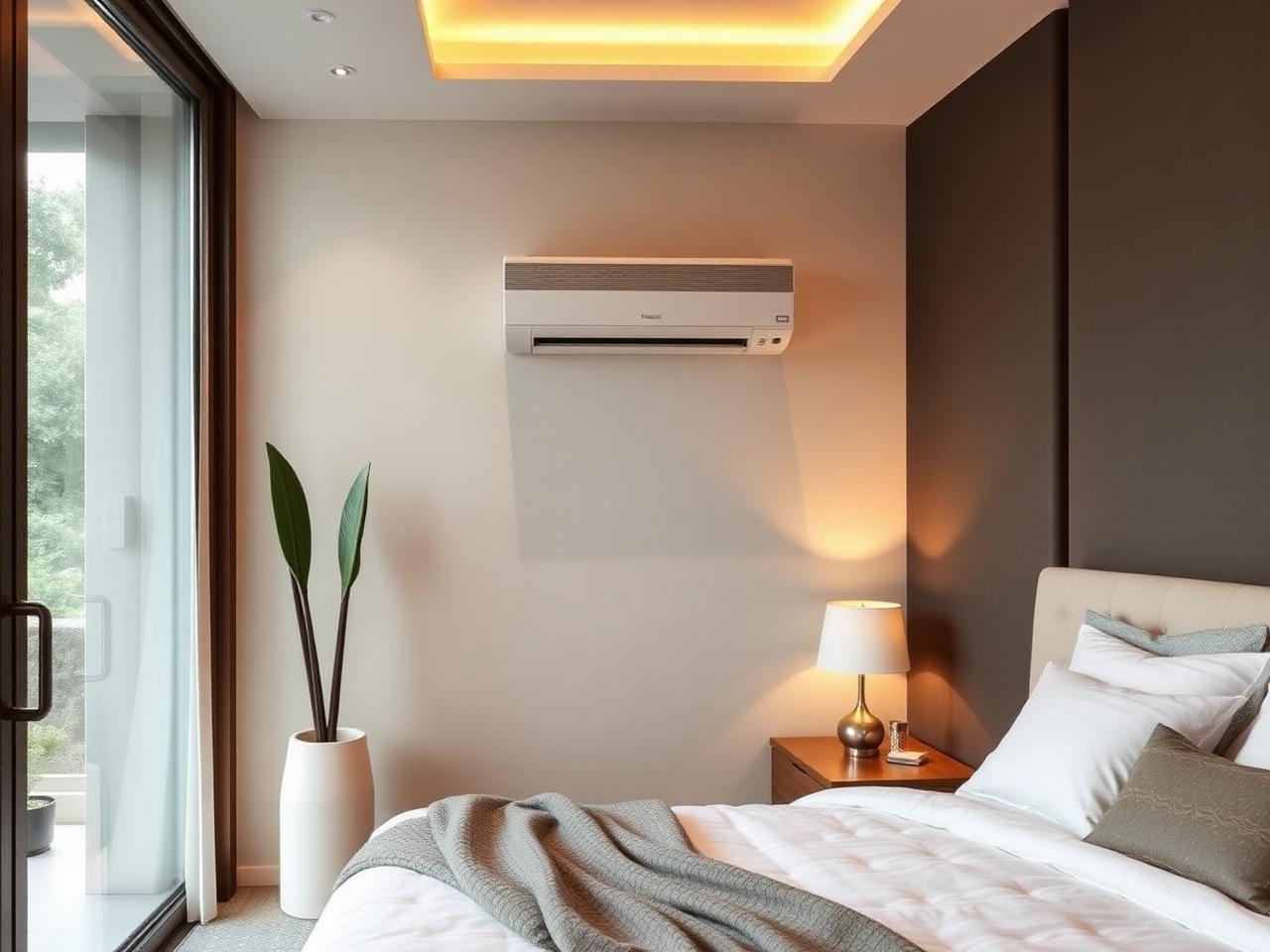
Most people still think of air conditioning as a summer-only luxury, but the inverter heat pumps installed in modern split systems are just as good at heating. A quality unit can deliver three to four kilowatts of heat for every kilowatt of electricity it uses, and it does it without flames, flues or a gas connection. For Derbyshire homes — especially well-insulated new builds, home offices, extensions and rooms that the central heating never quite reaches — that can make air conditioning a genuine year-round investment rather than a seasonal one.
Key takeaways
- Modern split systems are reversible heat pumps: they move heat in either direction.
- Typical COP in heating is 3.0–4.5, meaning 3–4.5kW of heat per 1kW of electricity.
- Best suited to zoned heating: home offices, bedrooms, extensions and new-build properties.
- At current energy prices, heat-pump heating often undercuts direct electric heating and can rival gas for small zones.
- Annual servicing is essential to keep efficiency high and protect the manufacturer warranty.
How reverse-cycle heating works
A split system moves heat using refrigerant, not by creating heat from fuel. In cooling mode it absorbs heat from the indoor air and dumps it outside. In heating mode a reversing valve flips the flow so the outdoor coil absorbs low-grade heat from the outside air and releases it inside. Even on a cold Derbyshire morning at 2°C, there is still enough energy in the air for the system to work efficiently.
The efficiency is measured as Coefficient of Performance, or COP. A COP of 3.5 means 3.5kW of heat output for 1kW of electrical input. Gas boilers, by comparison, are around 90% efficient. That is why heat pumps can be cheaper to run than direct electric heating and competitive with gas when you are only heating one or two rooms.
Where heat-pump heating makes most sense
- Home offices used all day. Heating just the office with the AC avoids warming the whole house.
- Bedrooms that run cold overnight. Setback heating is quiet and avoids the dry, stuffy feeling of radiators.
- Glazed extensions and conservatories. These spaces overheat in summer and lose heat fast in winter; a single system handles both.
- Properties without a gas connection. Rural Derbyshire cottages and barn conversions can skip LPG or oil top-ups.
- New builds with high insulation. Low heat load means a small unit can cover a surprisingly large area.
Running costs: heat pump versus gas and electric
| Heating type | Efficiency | Typical cost per useful kWh of heat |
|---|---|---|
| Modern gas combi boiler | ~90% | ~8–9p |
| Direct electric heater | ~100% | ~26–30p |
| Air-source heat pump (AC) | COP 3.5 | ~7–9p |
| Air-source heat pump at low load | COP 4.0+ | ~6–7p |
Illustrative figures based on typical 2026 UK energy prices. Actual COP depends on outdoor temperature and system sizing.
The numbers above are per useful kilowatt-hour of heat, not per kilowatt-hour of fuel. That is the fair comparison. A heat pump looks expensive on electricity use until you remember it produces three to four times more heat than the metered units.
What affects efficiency in winter
- 1Outdoor temperature. Efficiency falls as it gets colder, but modern inverter units still perform well down to -15°C and below.
- 2Unit sizing. An undersized unit will run flat out and lose efficiency; oversizing short-cycles and feels less comfortable.
- 3Indoor setpoint. Keeping the room at 21°C instead of 24°C makes a noticeable difference to running cost.
- 4Maintenance. Dirty filters and coils reduce airflow and heat transfer, which pushes the unit to work harder.
- 5Room insulation. Draughty windows and uninsulated walls mean the heat you pay for leaves faster.
Is it a replacement for a boiler?
For a whole house, usually not on its own. Most UK homes need multiple indoor units or a dedicated air-to-water heat pump to replace a boiler completely. But as a supplementary or zoned heating source, wall-mounted split systems are hard to beat. They are fast to install, need no hot-water plumbing, and give cooling as a bonus in summer.
The sweet spot is a home where one or two rooms are problematic. A south-facing extension that is too hot in July and too cold in January is the textbook case. Instead of adding a radiator and a separate cooling solution, one multi-split or single-split does both jobs.
Installation considerations
Ask your engineer about heating mode
- Confirm the model is a true reversible heat pump, not cooling-only.
- Check the low-temperature performance curve; some budget units struggle below 0°C.
- Make sure the outdoor unit is sized for the heating load, not just cooling.
- Ask about defrost cycles and noise levels in winter.
- Verify the warranty covers heating use and annual servicing requirements.
Not every installer sizes for heating by default. If you intend to use the system year-round, say so at the survey stage. The heating load calculation may lead to a different unit selection than a cooling-only design.
Frequently asked questions
Does air conditioning heating work in freezing weather?+
Yes. Quality inverter units are rated to perform well below freezing, and many continue working efficiently down to -15°C or lower. Derbyshire winter temperatures are rarely a problem.
Is it cheaper than gas central heating?+
For whole-house heating, gas is usually still cheaper. For one or two zones, or homes without gas, heat-pump air conditioning is often the most economical option.
Will it dry the air out like old electric heaters?+
No. Heat pump heating moves heat with refrigerant, so it does not scorch the air. It also dehumidifies less in heating mode than in cooling mode.
Can one outdoor unit heat multiple rooms?+
Yes. A multi-split outdoor unit can feed several indoor units, and each room can be heated or cooled independently.