
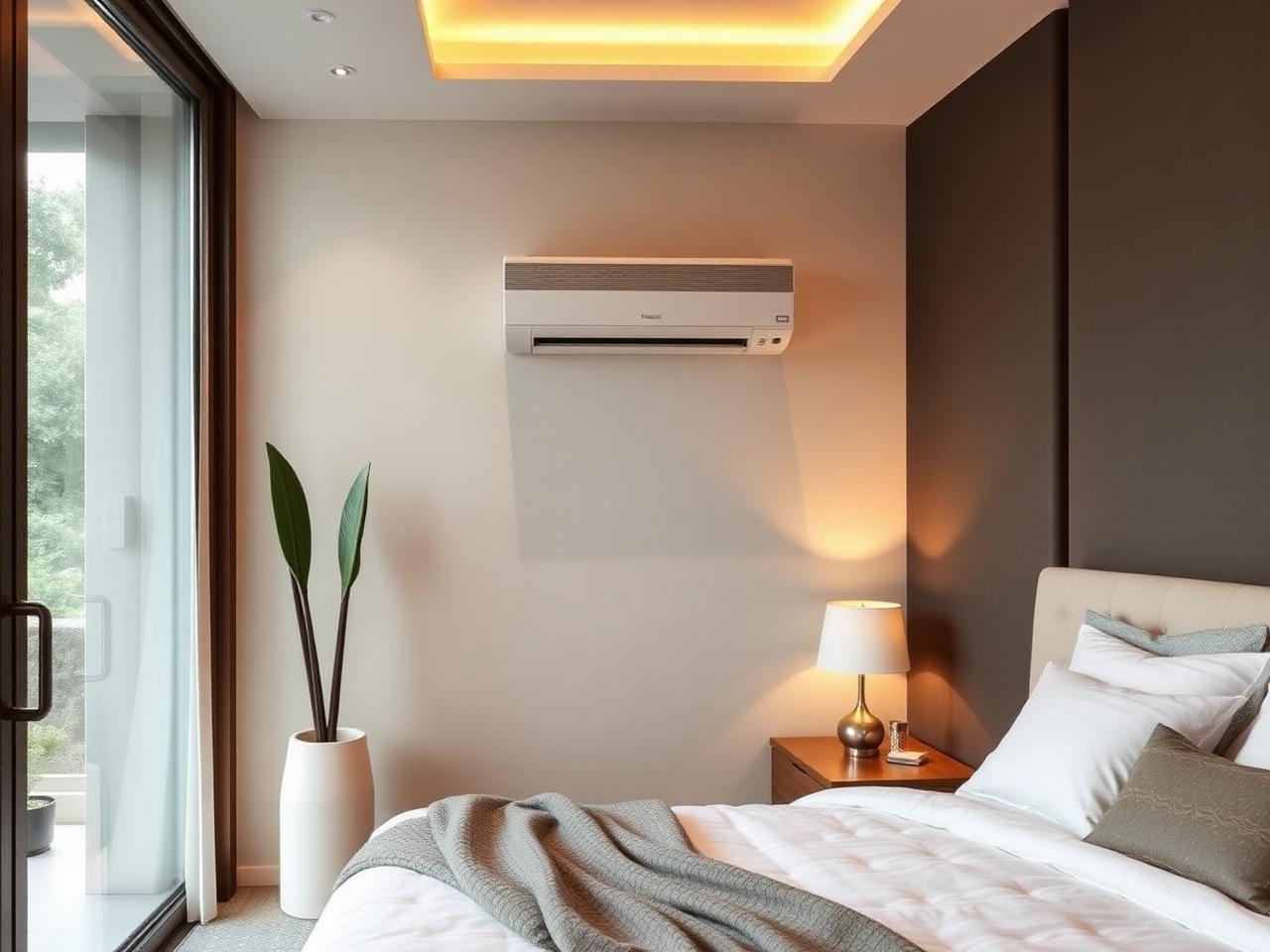
Nothing ruins a new air conditioning installation faster than discovering it sounds like a busy kitchen extractor. The good news is that modern inverter units are dramatically quieter than older models. The bad news is that noise is measured in several ways, and a headline figure on a brochure does not tell the whole story. This guide explains how to read noise ratings, what installation factors matter, and how to keep both indoor and outdoor units discreet.
Key takeaways
- Look for indoor units rated below 24dB(A) on the lowest fan speed for bedrooms and quiet rooms.
- Outdoor unit noise matters as much as indoor noise, especially in terraced or semi-detached homes.
- Inverter compressors run at variable speed, so they are quieter than old on/off units.
- Vibration isolation, flexible pipework and solid mounting all reduce real-world noise.
- A poorly installed quiet unit can sound louder than a noisier unit installed correctly.
Understanding decibel ratings
Air conditioning noise is measured in dB(A), which is a decibel scale weighted to match human hearing. A 3dB increase is roughly noticeable; a 10dB increase sounds twice as loud. Most modern indoor units produce 19–24dB(A) on low fan speed, which is comparable to a quiet rural night. On full cooling power the same unit might reach 35–42dB(A), similar to a refrigerator.
| Sound level | Comparison | Suitable for |
|---|---|---|
| 19–22dB(A) | Rustling leaves | Bedrooms, libraries, recording rooms |
| 23–27dB(A) | Quiet rural night | Bedrooms, lounges, home offices |
| 28–34dB(A) | Quiet fridge | Living rooms, kitchens, offices |
| 35–42dB(A) | Moderate rainfall | Commercial spaces, utility rooms |
| 50dB(A)+ | Busy office | Outdoor units need careful placement |
Indicative comparisons for indoor unit noise levels.
What makes an indoor unit quiet
The indoor unit noise comes mainly from the fan and airflow. Larger, slower-spinning fans move the same air volume with less turbulence. Inverter-driven fans ramp up gradually rather than jumping to full speed. Ducted and ceiling cassette units can be quieter than wall units because the grille is larger and air spreads more evenly. Premium units also use better bearings and fan blade designs.
Outdoor unit noise and neighbour considerations
Outdoor units have a compressor and a large fan. The compressor is the deeper hum; the fan is the whoosh. A unit rated at 48dB(A) at one metre will sound much louder if it is mounted on a party wall at bedroom-window height than if it is on a ground-level plinth behind a fence. Many local authorities use 45dB(A) at the nearest neighbour window as a rough guide for permitted development noise, though this is not a legal limit.
- Place the outdoor unit away from bedroom windows, yours and next door's.
- Use vibration-absorbing feet or wall brackets; rigid mounting transmits noise into the wall.
- Allow clearance around the unit; restricted airflow makes the fan work harder and louder.
- Consider an acoustic enclosure only if it does not block airflow.
- Keep the coil clean; a clogged coil raises pressure and noise.
Installation choices that affect noise
The quietest unit in the world will sound bad if it rattles against a thin soffit or blows air across a hard glass surface. A good installer thinks about airflow paths, structure-borne vibration and reflected sound. Flexible refrigerant lines, anti-vibration mounts and careful positioning of the outdoor unit often make more difference to perceived noise than the dB rating on the box.
Low-noise installation checklist
- Ask for the low-fan noise rating, not the maximum.
- Check the outdoor unit rating and planned position relative to neighbours.
- Confirm anti-vibration mounts or feet are included.
- Make sure pipework has flexible sections and is not pulled tight.
- Request a quiet mode or night mode setting for bedrooms.
Frequently asked questions
What is the quietest type of air conditioner?+
Ducted and ceiling cassette systems can be the quietest because air is distributed over a larger area. For wall-mounted units, premium inverter models from established Japanese and Korean brands are usually quietest.
Can I make an existing outdoor unit quieter?+
Sometimes. Vibration pads, cleaning the coils, and ensuring good airflow can help. Acoustic enclosures are possible but must be designed not to restrict airflow.
Will my neighbours complain about the outdoor unit?+
If it is positioned thoughtfully and rated under 50dB(A), complaints are rare. Poor placement near a bedroom window is the most common cause of disputes.
Do inverter units run more quietly?+
Yes. Inverters vary compressor and fan speed instead of cycling on and off at full power, so they spend most of their time at low, quiet speeds.