
Older people are more vulnerable to temperature extremes. In summer, overheating can lead to dehydration, confusion and serious health complications. In winter, cold rooms increase the risk of respiratory illness and falls. For care homes in Derbyshire, air conditioning is therefore as much a safeguarding tool as a comfort feature. The right system maintains a stable, safe temperature year-round while being quiet, easy to clean and reliable enough to run continuously.
Key takeaways
- Elderly residents are more sensitive to heat and cold; stable temperatures between 19°C and 24°C are recommended.
- Quiet operation and draught-free airflow are essential for comfort and sleep.
- Wall-mounted units should be positioned out of reach and away from beds where possible.
- Filtration and regular cleaning support infection control and air quality.
- Modern heat-pump systems provide efficient cooling in summer and heating in winter.
Why care homes need careful climate control
Regulatory bodies expect care homes to maintain a comfortable and safe environment. CQC inspections look at temperature management, and poor control can be flagged as a quality issue. Beyond compliance, resident dignity and wellbeing depend on being neither too hot nor too cold. Dementia residents may not communicate discomfort, so a reliable system that holds a steady temperature is particularly important.
Recommended temperature ranges
| Area | Winter | Summer |
|---|---|---|
| Bedrooms | 19–21°C | 21–24°C |
| Communal lounges | 20–22°C | 21–24°C |
| Dining rooms | 20–22°C | 21–24°C |
| Bathrooms | 22–24°C | 23–25°C |
| Medication storage | As per manufacturer | Usually 15–25°C |
General guidance; follow CQC advice and individual care plans.
Best systems for care homes
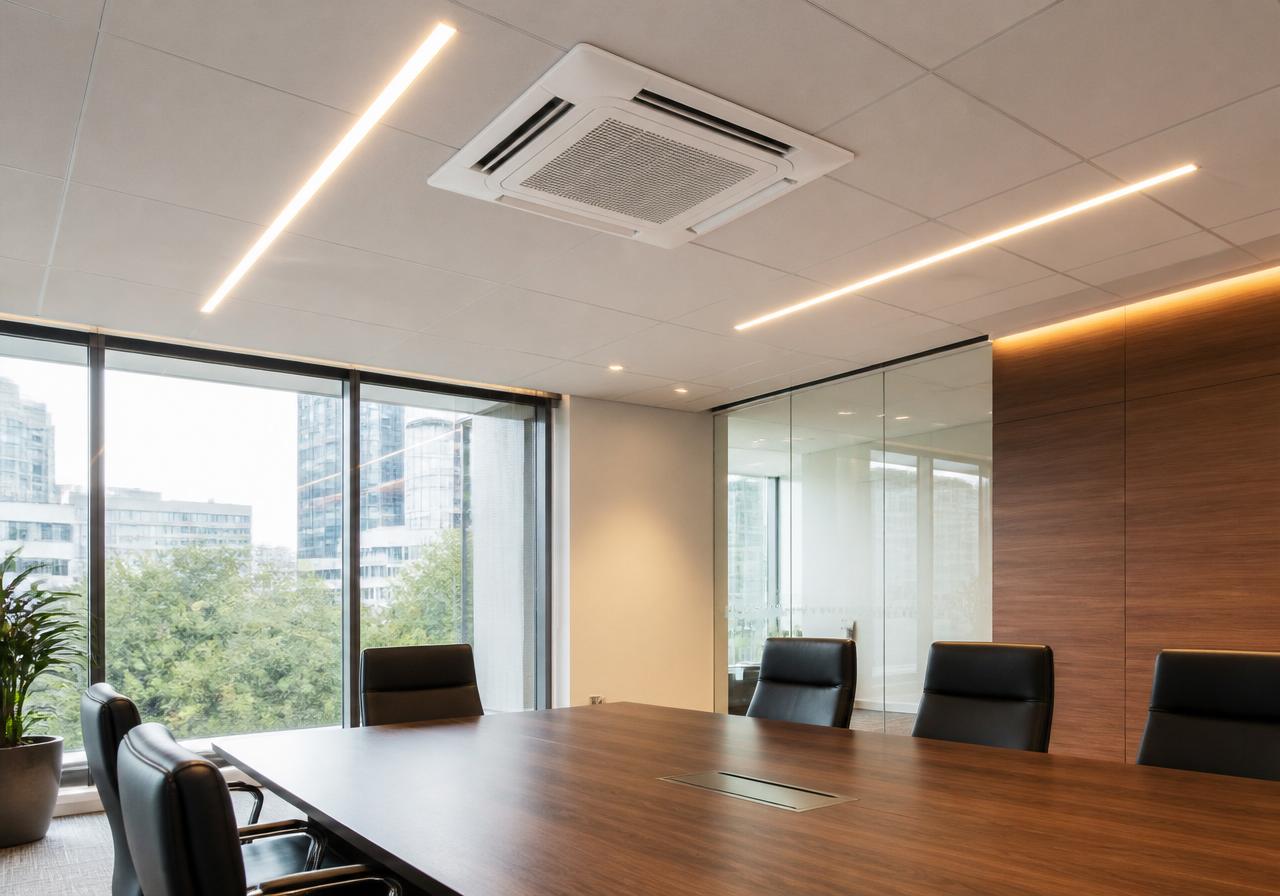
Ceiling cassettes and ducted systems are usually better than wall units in care settings because the airflow is gentler and more distributed. Wall units can be knocked, tampered with, or blow directly onto a bed. Where wall units are used, they should be mounted high, out of reach, and angled so airflow does not hit residents directly.
- Ceiling cassettes: even airflow, quiet, out of reach, easy to clean.
- Ducted systems: invisible grilles, ideal for premium or sensitive interiors.
- Wall-mounted splits: lower cost but need careful positioning.
- Multi-split or VRF: allows different temperatures in bedrooms and communal areas.
Air quality and infection control
Filters should be cleaned or replaced on a strict schedule. Some units offer anti-bacterial or ionising filters, though these should be viewed as a supplement to good ventilation and cleaning, not a replacement. Air movement helps prevent stagnant pockets but must be gentle enough not to cause discomfort.
Care home AC checklist
- Choose quiet units with low fan speeds for bedrooms.
- Position units to avoid direct draughts onto beds or seating.
- Install lockable or staff-only controls where appropriate.
- Set up a documented filter cleaning and maintenance schedule.
- Use heat-pump mode for efficient, stable winter heating.
Medication and storage rooms
Many medications must be stored within a specific temperature range. A dedicated air-conditioned medication room with monitoring and alarm is common in larger homes. The cooling here is separate from comfort cooling because it must be reliable and continuously logged.
Frequently asked questions
Is air conditioning safe for elderly residents?+
Yes, when it is correctly sized, positioned and maintained. Avoid direct draughts and keep temperatures stable rather than very cold.
What temperature should a care home bedroom be?+
Guidance generally recommends 19–21°C in winter and 21–24°C in summer, adjusted for individual resident needs.
How often should care home AC be serviced?+
At least twice a year, with filter cleaning monthly or more often in high-occupancy areas.
Can one system heat and cool?+
Yes. Modern heat-pump air conditioning provides efficient cooling in summer and heating in winter from the same equipment.