
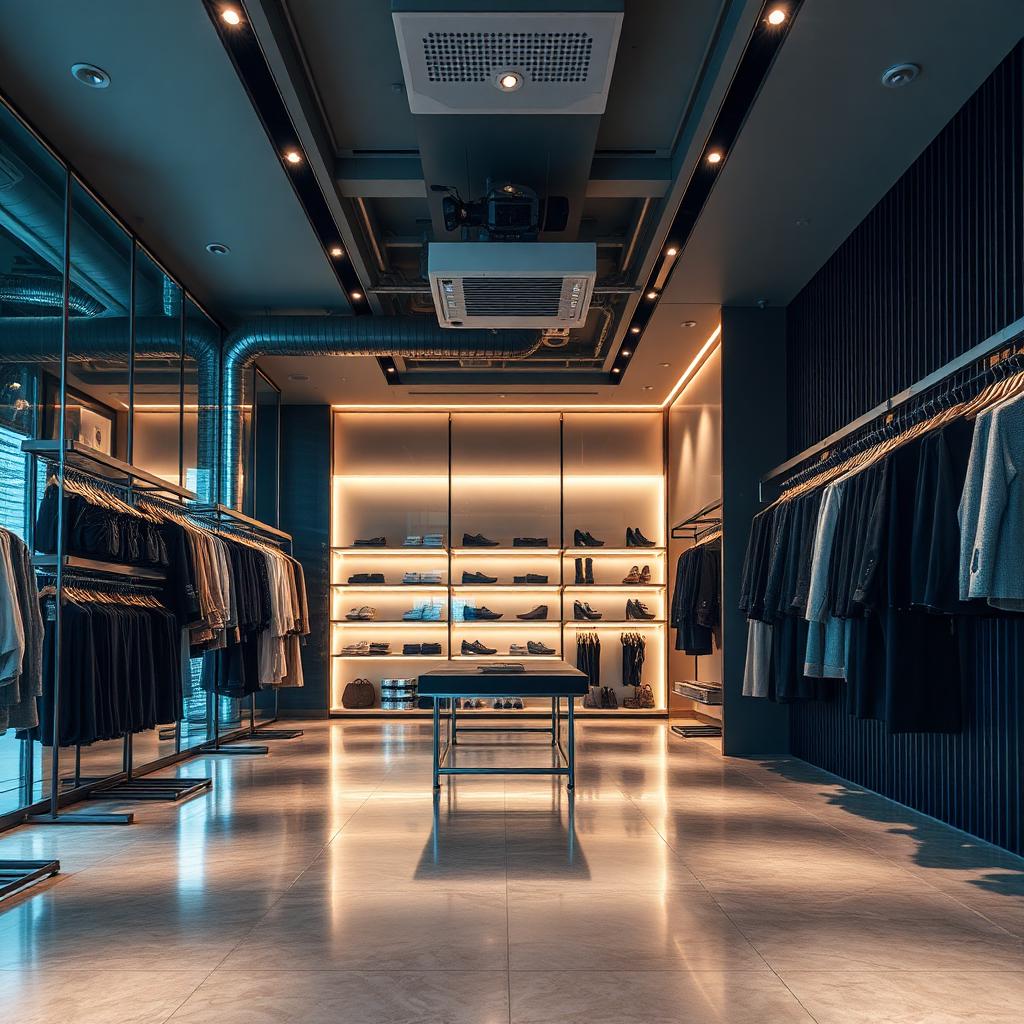
A hot, stuffy shop loses customers. Studies consistently show that shoppers stay longer and spend more in comfortable environments. For retail businesses in Derbyshire, air conditioning is not just a staff comfort issue — it directly affects sales, stock quality and customer reviews. This guide explains how to choose and size a retail air conditioning system, what it costs, and how to keep running bills under control.
Key takeaways
- Ceiling cassettes and ducted systems are the most common choices for retail because they are discreet and distribute air evenly.
- Open doors and large glazing dramatically increase the cooling load.
- Zoning lets you cool the shopfloor differently from stockrooms and changing areas.
- Heat recovery ventilation can reduce cooling load in busy, tightly sealed stores.
- Planned maintenance keeps the system reliable during peak trading periods.
Choosing the right system for a shop
Retail spaces need discreet, even cooling that does not blow directly onto customers or merchandise. Wall-mounted units can work in small shops but are usually too visible and create draughts at head height. Ceiling cassettes are the retail standard: they sit flush with a suspended ceiling, blow air in four directions, and are quiet. Ducted systems are even more hidden and are ideal for high-end or listed interiors.
| System type | Best for | Typical installed cost |
|---|---|---|
| Wall-mounted split | Small shops, back rooms | £1,800–£3,500 per unit |
| Ceiling cassette | Most retail floors | £3,000–£6,000 per unit |
| Ducted system | Premium fit-outs, large spaces | £4,000–£8,000 per zone |
| VRF / multi-split | Multiple zones, larger stores | £8,000–£25,000+ |
Indicative costs for retail air conditioning supply and install.
Sizing for open doors and glazing
Shops with open frontages or frequent door openings lose cool air constantly. That is called infiltration load, and it can double the cooling requirement compared to an equivalent office. Large south-facing shop windows also add solar gain. A proper retail sizing calculation will ask about door usage, glazing area, lighting heat, customer occupancy and equipment such as tills, displays and fridges.
Zoning and control
A shop is not one uniform space. The shopfloor, changing rooms, stockroom and staff area have different uses and occupancy. A multi-split or VRF system lets you zone each area independently. Smart controls can schedule the system to pre-cool before opening, setback during quiet periods, and switch off automatically after closing.
Retail AC design checklist
- Allow for infiltration from open doors and busy entrances.
- Choose ceiling cassettes or ducted units for even, discreet airflow.
- Zone the shopfloor, back-of-house and changing areas separately.
- Use timers and setback temperatures to reduce out-of-hours running.
- Plan maintenance outside peak trading hours.
Running costs and efficiency
Retail air conditioning can be one of the biggest energy costs in a shop. Inverter-driven systems reduce power by modulating cooling output rather than cycling on and off. Heat recovery ventilation can pre-cool incoming fresh air using energy extracted from stale exhaust air. LED lighting, solar film and air curtains over open doorways all reduce the load on the AC system.
Maintenance for reliability
A breakdown on a hot Saturday in July costs far more than a maintenance visit. Retail systems should be serviced before the summer season, with filters cleaned, coils inspected, refrigerant checked and drains flushed. A maintenance contract with priority callout is sensible for any shop that depends on trading through the summer.
Frequently asked questions
What is the best air conditioning for a small shop?+
A ceiling cassette or high-wall split depending on ceiling height and layout. Cassettes are more discreet and distribute air better.
How much does shop air conditioning cost?+
A single ceiling cassette for a small shop typically starts around £3,000–£4,500 installed. Larger or multi-zone stores run into five figures.
Should I leave air conditioning on overnight?+
No. Use a timer to pre-cool before opening and switch off after closing. Setback mode can protect stock without wasting energy.
Can air conditioning protect stock?+
Yes. Stable temperature and humidity help protect food, cosmetics, electronics and other temperature-sensitive stock.